Pilates Blog | Latte Pilates & Coffee Brussels
Pilates

The Complete Guide to Pilates for Beginners

The Complete Guide to Pilates for Beginners

June 17, 2025
June 17, 2025
Yoga
Yoga
Yoga

The Complete Guide to Pilates for Beginners: Everything You Need to Know

When people first hear about Pilates, they often picture flexible dancers performing complex movements on mysterious equipment, or celebrities swearing by their latest wellness secret. While Pilates has certainly gained popularity among performers and fitness enthusiasts alike, its true essence goes far deeper than trendy workout routines or Instagram-worthy poses.

Pilates is a transformative practice that bridges the gap between physical fitness and mental well-being. Created nearly a century ago by Joseph Pilates, this method has evolved into one of the most effective and accessible forms of exercise, suitable for everyone from complete beginners to elite athletes recovering from injuries.

In this comprehensive guide, we'll explore everything you need to know about starting your Pilates journey. Whether you're looking to improve your posture, build core strength, recover from an injury, or simply discover a new way to move your body, understanding the fundamentals of Pilates will help you unlock its remarkable benefits and build a sustainable practice that transforms not just your body, but your entire approach to wellness.

The foundations of Pilates

Understanding the principles: Pilates is built on six core principles that distinguish it from other forms of exercise. These aren't just abstract concepts – they're the foundation of every movement you'll make in your practice.

  • Concentration: Pilates demands your full attention. Unlike mindless cardio, every movement requires focused awareness of your body's position, alignment, and muscle engagement. This mental focus creates a moving meditation that quiets the mind while strengthening the body.

  • Control: Joseph Pilates originally called his method "Contrology" because it emphasizes controlled, precise movements over momentum or speed. This control prevents injury and ensures you're targeting the right muscles with every exercise.

  • Centering: Everything in Pilates flows from your "powerhouse" – the core muscles including your abdominals, lower back, hips, and glutes. Learning to initiate movement from this central zone creates stability and power throughout your entire body.

  • Precision: Quality always trumps quantity in Pilates. Performing five perfect repetitions with proper form delivers far better results than twenty sloppy ones. This precision teaches body awareness that carries into your daily life.

  • Breath: Pilates uses specific breathing patterns to oxygenate your muscles, facilitate movement, and maintain core engagement. Coordinating breath with movement becomes second nature with practice.

  • Flow: Movements in Pilates are designed to flow smoothly from one to the next, creating grace and efficiency in your body. This flowing quality makes Pilates feel more like dance than traditional exercise.

The science behind the practice

How Pilates transforms your body: The benefits of Pilates aren't just anecdotal – they're backed by extensive research and biomechanical principles that explain why this method delivers such remarkable results.

  • Core strength and stability: Pilates specifically targets the deep stabilizing muscles of your core, including the transverse abdominis and multifidus. These muscles act like an internal corset, supporting your spine and improving overall stability. Research shows that regular Pilates practice can reduce lower back pain and improve functional movement patterns.

  • Posture correction: Modern life – with its hours spent hunched over computers and phones – wreaks havoc on our posture. Pilates systematically addresses muscular imbalances, strengthening weak postural muscles while stretching tight, overactive ones. The result is improved alignment that reduces pain and enhances your appearance.

  • Flexibility without compromise: Unlike static stretching, Pilates builds flexibility through dynamic, controlled movements that simultaneously strengthen muscles. This creates functional flexibility – the ability to move through a full range of motion with control and stability.

  • Mind-body connection: Pilates requires constant communication between your brain and muscles. This neurological training improves proprioception (awareness of your body in space) and creates more efficient movement patterns that benefit everything from walking to sports performance.

  • Low-impact, high-results: The controlled nature of Pilates makes it incredibly joint-friendly. You can build significant strength and endurance without the impact stress of running or the joint compression of heavy weightlifting, making it ideal for all ages and fitness levels.

Getting started with mat Pilates

Why mat Pilates is perfect for beginners: Mat Pilates offers a pure, accessible entry point into this transformative practice. Using only your body weight and a mat, you'll develop strength, flexibility, and body awareness without needing expensive equipment or gym memberships.

  • Accessible anywhere: Once you learn the fundamentals, you can practice Pilates anywhere – at home, in a park, while traveling, or in a dedicated studio. This accessibility makes it easy to maintain consistency, which is key to seeing results.

  • Body weight mastery: Mat Pilates challenges you to control and move your own body weight with precision. This builds functional strength that directly translates to daily activities like lifting, reaching, and maintaining good posture throughout the day.

  • Foundation for life: The exercises and principles you learn in mat Pilates create a movement foundation that benefits every other physical activity. You'll develop body awareness and control that enhances everything from yoga to running to simply sitting at your desk.

  • Scalable challenge: Mat Pilates grows with you. The same exercise that feels challenging as a beginner can be progressed and modified to continue challenging you for years. Small adjustments in position, tempo, or range of motion create endless variations.

What to expect in your first class: Walking into your first Pilates class can feel intimidating, but knowing what to expect helps ease those first-day jitters.

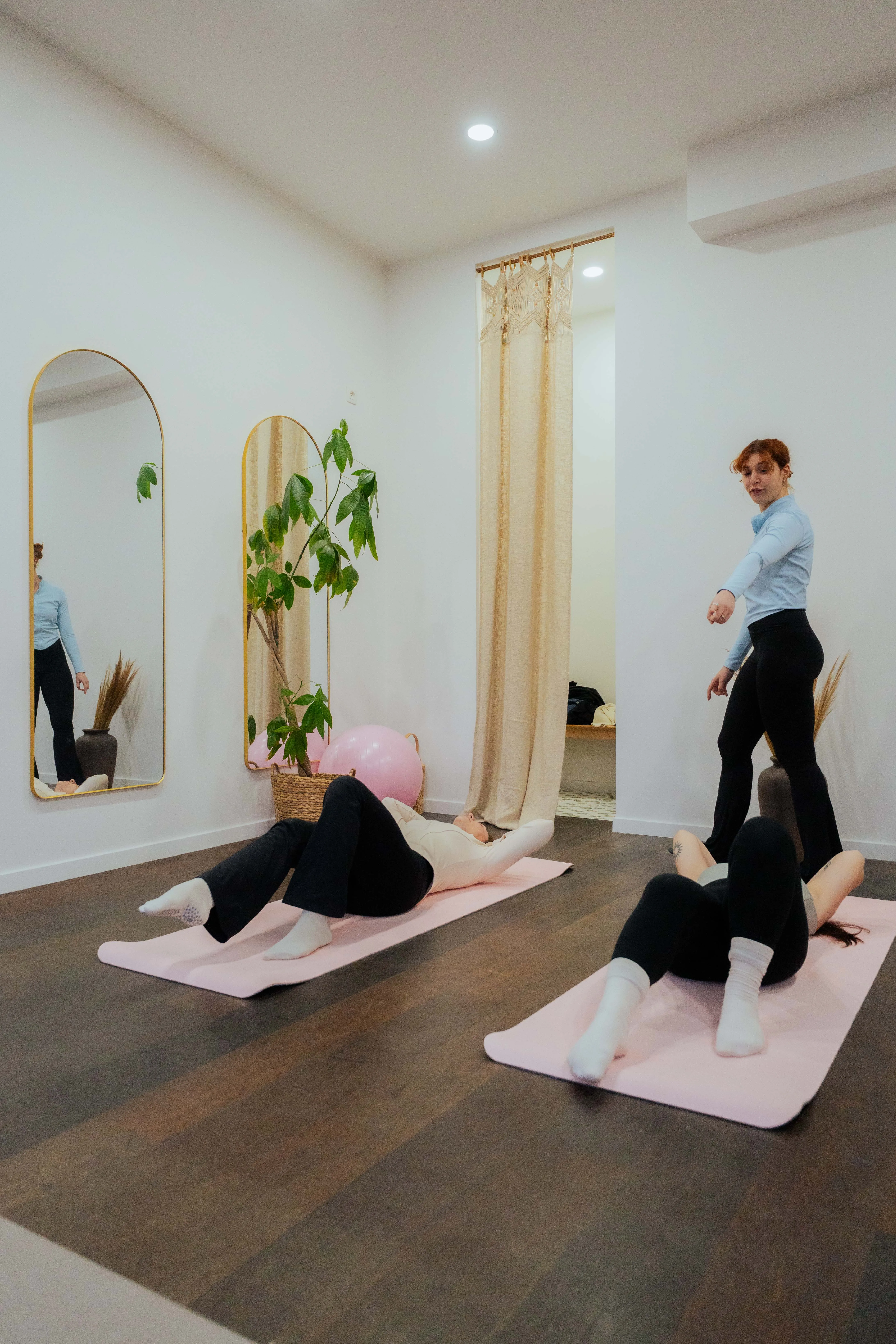
  • Small class sizes: Quality Pilates studios limit class sizes to ensure proper instruction and individual attention. Don't be shy about telling your instructor you're new – they'll provide modifications and extra guidance to help you learn proper form.

  • Proper form over everything: You'll hear corrections frequently. This isn't criticism – it's essential feedback that helps you get the most from each exercise while staying safe. Embrace these adjustments as opportunities to deepen your practice and understand your body better.

  • The burn (and the shake): Pilates targets muscles you didn't know existed. It's normal to shake during exercises – that's your muscles learning new movement patterns and working in unfamiliar ways. This muscular fatigue is different from pain; you should never feel sharp or shooting discomfort.

  • Post-class glow: Many people report feeling taller, more aligned, and energized after their first class. This is the immediate effect of improved posture and the endorphin release from mindful movement. You might notice you're standing straighter without even thinking about it.

  • Simple equipment needs: All you need is a quality mat with enough cushioning to protect your spine, and comfortable clothing that allows freedom of movement. Some studios provide small props like resistance bands or Pilates balls, but these aren't essential for beginners.

Essential exercises every beginner should know

Building blocks of your practice: While Pilates includes hundreds of exercises, mastering a few foundational movements gives you a solid base to build upon. These exercises appear in virtually every mat Pilates class and teach you the core principles of the method.

  • The Hundred: This classic warm-up exercise teaches breath coordination, core engagement, and endurance. You'll pump your arms rhythmically while holding your legs in a controlled position, breathing in for five counts and out for five counts until you reach one hundred arm pumps. It's challenging, but it sets the tone for your entire practice.

  • Roll-ups: This exercise develops spinal articulation and core strength. You'll slowly roll up from lying flat to sitting tall, then reverse the movement with control. Many beginners struggle with roll-ups initially – this is completely normal and shows you exactly where you need to build strength and flexibility.

  • Single leg stretch: This exercise combines core stability with coordination. You'll lie on your back with your head and shoulders lifted, alternating legs while maintaining a steady torso. It teaches you to move your limbs independently while keeping your center stable – a skill that translates to better movement in daily life.

  • Spine stretch forward: This seated exercise emphasizes the articulation of your spine and the connection between breath and movement. You'll sit tall and slowly round forward, reaching toward your toes while maintaining length in your spine. It's a beautiful counter-movement to our tendency to slouch.

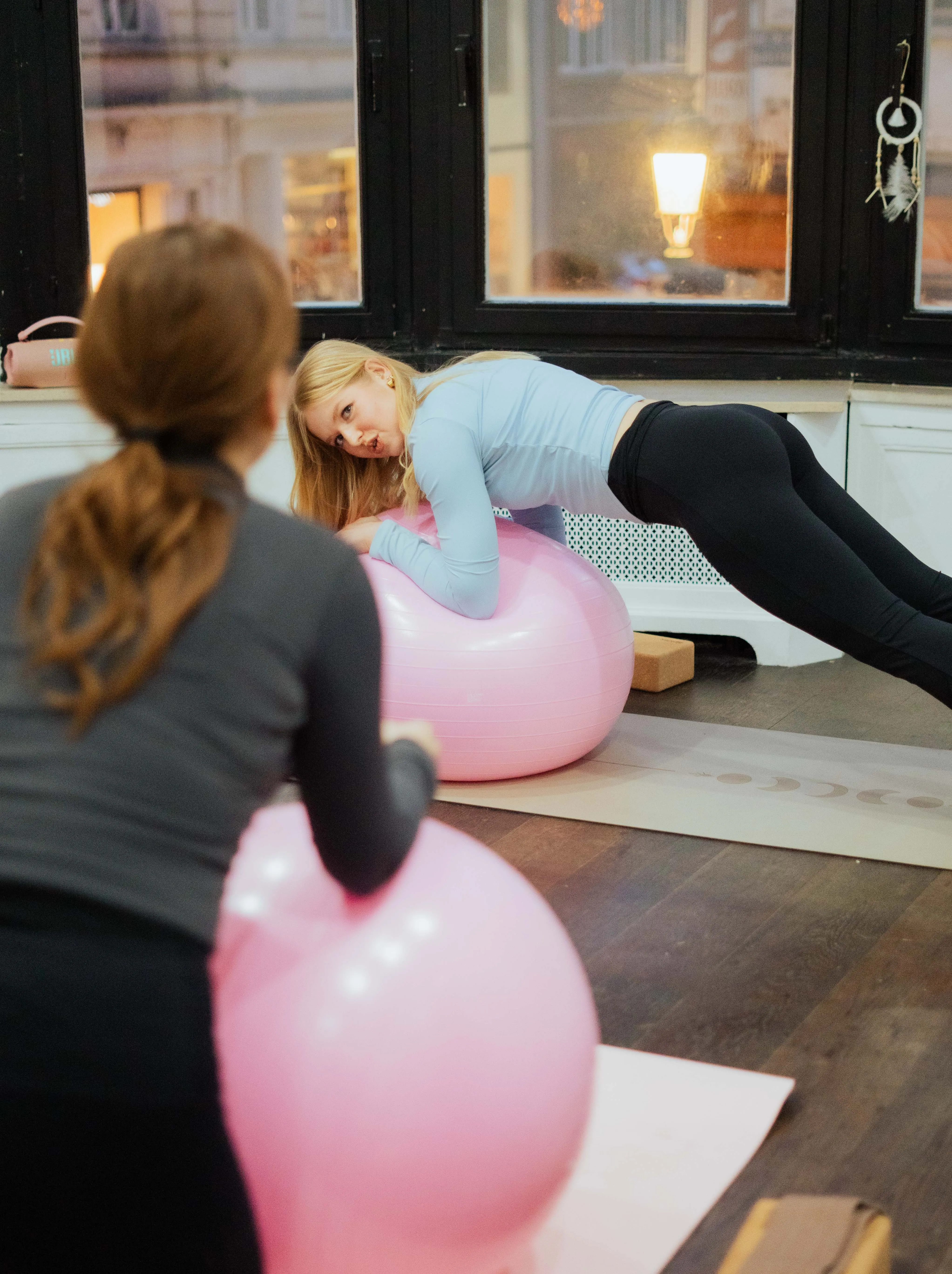
  • Plank variations: While not exclusive to Pilates, planks are integral to mat work. Pilates planks emphasize proper shoulder placement, core engagement, and breathing, transforming a simple hold into a full-body strengthening exercise.

Building your Pilates routine

Consistency is key: Like any practice, Pilates delivers the best results with regular, consistent effort. But what does "regular" actually mean for busy people balancing work, family, and other commitments?

  • Starting frequency: Beginners should aim for 2-3 sessions per week. This allows your body time to adapt and recover while building strength and familiarity with the movements. Even two 45-minute sessions per week will produce noticeable results within a month.

  • Progression timeline: Most people notice improved posture and body awareness within 2-3 weeks, increased strength and flexibility within 4-6 weeks, and visible physical changes within 3 months of consistent practice. Joseph Pilates himself said: "In 10 sessions you'll feel the difference, in 20 sessions you'll see the difference, and in 30 sessions you'll have a whole new body."

  • Home practice tips: Once you've learned proper form in classes, incorporating short home sessions between studio visits accelerates your progress. Even 15 minutes of focused mat work at home maintains your connection to the practice and reinforces what you're learning in class.

  • Complementing other activities: Pilates enhances virtually every other physical activity. Runners improve their stride efficiency and reduce injury risk, weightlifters develop better form and core stability, cyclists improve their posture and breathing, and desk workers combat the effects of prolonged sitting.

Common beginner mistakes and how to avoid them

Learning from others' experiences: Every Pilates practitioner has made these mistakes. Recognizing them early helps you progress faster and stay injury-free.

  • Rushing through movements: Pilates is not about speed or racing through repetitions. Slowing down allows you to focus on proper form, engage the right muscles, and build the mind-body connection that makes Pilates so effective.

  • Holding your breath: Breath is integral to Pilates, not an afterthought. Many beginners hold their breath during challenging exercises, which creates tension and limits your ability to move fluidly. Your instructor will guide you on when to inhale and exhale.

  • Skipping the warm-up: The beginning exercises in a Pilates class aren't just filler – they prepare your body for more challenging work and help you establish the mind-body connection you'll need throughout the session.

  • Comparing yourself to others: Everyone's body is different. The person next to you might have different flexibility, strength, or prior experience. Focus on your own practice and celebrate your individual progress.

  • Neglecting modifications: Using modifications isn't "cheating" – it's intelligent practice. Modifications allow you to maintain proper form while building the strength needed for the full expression of an exercise. They're a temporary stepping stone, not a permanent limitation.

In summary

Pilates is more than just another workout trend – it's a comprehensive movement system that addresses the whole body with intelligence and precision. Whether you're seeking pain relief, improved athletic performance, or simply a sustainable way to stay active as you age, Pilates offers a path forward that respects your body's current capabilities while gradually expanding them.

The beauty of mat Pilates lies in its simplicity and accessibility. You don't need expensive equipment, a gym membership, or even much space. What you need is a mat, some guidance from a qualified instructor, and a commitment to showing up for yourself consistently. The practice meets you exactly where you are and grows with you over time.

Starting your Pilates journey requires nothing more than curiosity, an open mind, and a willingness to move with intention. Your body is capable of remarkable things when given the right tools and guidance. Pilates provides both, creating a foundation of strength, flexibility, and awareness that extends far beyond the studio walls into every aspect of your daily life.
The Complete Guide to Pilates for Beginners: Everything You Need to Know

When people first hear about Pilates, they often picture flexible dancers performing complex movements on mysterious equipment, or celebrities swearing by their latest wellness secret. While Pilates has certainly gained popularity among performers and fitness enthusiasts alike, its true essence goes far deeper than trendy workout routines or Instagram-worthy poses.

Pilates is a transformative practice that bridges the gap between physical fitness and mental well-being. Created nearly a century ago by Joseph Pilates, this method has evolved into one of the most effective and accessible forms of exercise, suitable for everyone from complete beginners to elite athletes recovering from injuries.

In this comprehensive guide, we'll explore everything you need to know about starting your Pilates journey. Whether you're looking to improve your posture, build core strength, recover from an injury, or simply discover a new way to move your body, understanding the fundamentals of Pilates will help you unlock its remarkable benefits and build a sustainable practice that transforms not just your body, but your entire approach to wellness.

The foundations of Pilates

Understanding the principles: Pilates is built on six core principles that distinguish it from other forms of exercise. These aren't just abstract concepts – they're the foundation of every movement you'll make in your practice.

  • Concentration: Pilates demands your full attention. Unlike mindless cardio, every movement requires focused awareness of your body's position, alignment, and muscle engagement. This mental focus creates a moving meditation that quiets the mind while strengthening the body.

  • Control: Joseph Pilates originally called his method "Contrology" because it emphasizes controlled, precise movements over momentum or speed. This control prevents injury and ensures you're targeting the right muscles with every exercise.

  • Centering: Everything in Pilates flows from your "powerhouse" – the core muscles including your abdominals, lower back, hips, and glutes. Learning to initiate movement from this central zone creates stability and power throughout your entire body.

  • Precision: Quality always trumps quantity in Pilates. Performing five perfect repetitions with proper form delivers far better results than twenty sloppy ones. This precision teaches body awareness that carries into your daily life.

  • Breath: Pilates uses specific breathing patterns to oxygenate your muscles, facilitate movement, and maintain core engagement. Coordinating breath with movement becomes second nature with practice.

  • Flow: Movements in Pilates are designed to flow smoothly from one to the next, creating grace and efficiency in your body. This flowing quality makes Pilates feel more like dance than traditional exercise.

The science behind the practice

How Pilates transforms your body: The benefits of Pilates aren't just anecdotal – they're backed by extensive research and biomechanical principles that explain why this method delivers such remarkable results.

  • Core strength and stability: Pilates specifically targets the deep stabilizing muscles of your core, including the transverse abdominis and multifidus. These muscles act like an internal corset, supporting your spine and improving overall stability. Research shows that regular Pilates practice can reduce lower back pain and improve functional movement patterns.

  • Posture correction: Modern life – with its hours spent hunched over computers and phones – wreaks havoc on our posture. Pilates systematically addresses muscular imbalances, strengthening weak postural muscles while stretching tight, overactive ones. The result is improved alignment that reduces pain and enhances your appearance.

  • Flexibility without compromise: Unlike static stretching, Pilates builds flexibility through dynamic, controlled movements that simultaneously strengthen muscles. This creates functional flexibility – the ability to move through a full range of motion with control and stability.

  • Mind-body connection: Pilates requires constant communication between your brain and muscles. This neurological training improves proprioception (awareness of your body in space) and creates more efficient movement patterns that benefit everything from walking to sports performance.

  • Low-impact, high-results: The controlled nature of Pilates makes it incredibly joint-friendly. You can build significant strength and endurance without the impact stress of running or the joint compression of heavy weightlifting, making it ideal for all ages and fitness levels.

Getting started with mat Pilates

Why mat Pilates is perfect for beginners: Mat Pilates offers a pure, accessible entry point into this transformative practice. Using only your body weight and a mat, you'll develop strength, flexibility, and body awareness without needing expensive equipment or gym memberships.

  • Accessible anywhere: Once you learn the fundamentals, you can practice Pilates anywhere – at home, in a park, while traveling, or in a dedicated studio. This accessibility makes it easy to maintain consistency, which is key to seeing results.

  • Body weight mastery: Mat Pilates challenges you to control and move your own body weight with precision. This builds functional strength that directly translates to daily activities like lifting, reaching, and maintaining good posture throughout the day.

  • Foundation for life: The exercises and principles you learn in mat Pilates create a movement foundation that benefits every other physical activity. You'll develop body awareness and control that enhances everything from yoga to running to simply sitting at your desk.

  • Scalable challenge: Mat Pilates grows with you. The same exercise that feels challenging as a beginner can be progressed and modified to continue challenging you for years. Small adjustments in position, tempo, or range of motion create endless variations.

What to expect in your first class: Walking into your first Pilates class can feel intimidating, but knowing what to expect helps ease those first-day jitters.

  • Small class sizes: Quality Pilates studios limit class sizes to ensure proper instruction and individual attention. Don't be shy about telling your instructor you're new – they'll provide modifications and extra guidance to help you learn proper form.

  • Proper form over everything: You'll hear corrections frequently. This isn't criticism – it's essential feedback that helps you get the most from each exercise while staying safe. Embrace these adjustments as opportunities to deepen your practice and understand your body better.

  • The burn (and the shake): Pilates targets muscles you didn't know existed. It's normal to shake during exercises – that's your muscles learning new movement patterns and working in unfamiliar ways. This muscular fatigue is different from pain; you should never feel sharp or shooting discomfort.

  • Post-class glow: Many people report feeling taller, more aligned, and energized after their first class. This is the immediate effect of improved posture and the endorphin release from mindful movement. You might notice you're standing straighter without even thinking about it.

  • Simple equipment needs: All you need is a quality mat with enough cushioning to protect your spine, and comfortable clothing that allows freedom of movement. Some studios provide small props like resistance bands or Pilates balls, but these aren't essential for beginners.

Essential exercises every beginner should know

Building blocks of your practice: While Pilates includes hundreds of exercises, mastering a few foundational movements gives you a solid base to build upon. These exercises appear in virtually every mat Pilates class and teach you the core principles of the method.

  • The Hundred: This classic warm-up exercise teaches breath coordination, core engagement, and endurance. You'll pump your arms rhythmically while holding your legs in a controlled position, breathing in for five counts and out for five counts until you reach one hundred arm pumps. It's challenging, but it sets the tone for your entire practice.

  • Roll-ups: This exercise develops spinal articulation and core strength. You'll slowly roll up from lying flat to sitting tall, then reverse the movement with control. Many beginners struggle with roll-ups initially – this is completely normal and shows you exactly where you need to build strength and flexibility.

  • Single leg stretch: This exercise combines core stability with coordination. You'll lie on your back with your head and shoulders lifted, alternating legs while maintaining a steady torso. It teaches you to move your limbs independently while keeping your center stable – a skill that translates to better movement in daily life.

  • Spine stretch forward: This seated exercise emphasizes the articulation of your spine and the connection between breath and movement. You'll sit tall and slowly round forward, reaching toward your toes while maintaining length in your spine. It's a beautiful counter-movement to our tendency to slouch.

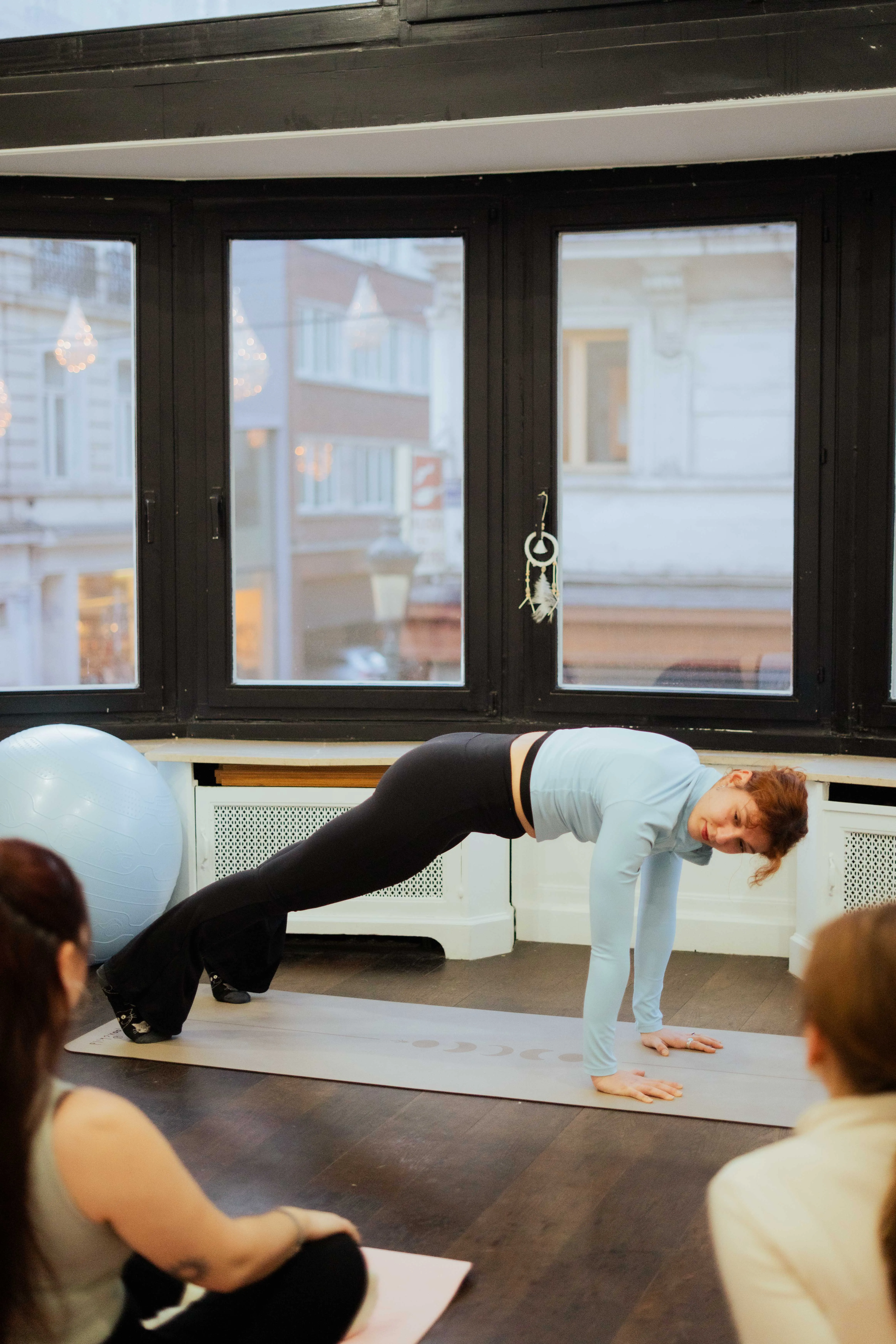
  • Plank variations: While not exclusive to Pilates, planks are integral to mat work. Pilates planks emphasize proper shoulder placement, core engagement, and breathing, transforming a simple hold into a full-body strengthening exercise.

Building your Pilates routine

Consistency is key: Like any practice, Pilates delivers the best results with regular, consistent effort. But what does "regular" actually mean for busy people balancing work, family, and other commitments?

  • Starting frequency: Beginners should aim for 2-3 sessions per week. This allows your body time to adapt and recover while building strength and familiarity with the movements. Even two 45-minute sessions per week will produce noticeable results within a month.

  • Progression timeline: Most people notice improved posture and body awareness within 2-3 weeks, increased strength and flexibility within 4-6 weeks, and visible physical changes within 3 months of consistent practice. Joseph Pilates himself said: "In 10 sessions you'll feel the difference, in 20 sessions you'll see the difference, and in 30 sessions you'll have a whole new body."

  • Home practice tips: Once you've learned proper form in classes, incorporating short home sessions between studio visits accelerates your progress. Even 15 minutes of focused mat work at home maintains your connection to the practice and reinforces what you're learning in class.

  • Complementing other activities: Pilates enhances virtually every other physical activity. Runners improve their stride efficiency and reduce injury risk, weightlifters develop better form and core stability, cyclists improve their posture and breathing, and desk workers combat the effects of prolonged sitting.

Common beginner mistakes and how to avoid them

Learning from others' experiences: Every Pilates practitioner has made these mistakes. Recognizing them early helps you progress faster and stay injury-free.

  • Rushing through movements: Pilates is not about speed or racing through repetitions. Slowing down allows you to focus on proper form, engage the right muscles, and build the mind-body connection that makes Pilates so effective.

  • Holding your breath: Breath is integral to Pilates, not an afterthought. Many beginners hold their breath during challenging exercises, which creates tension and limits your ability to move fluidly. Your instructor will guide you on when to inhale and exhale.

  • Skipping the warm-up: The beginning exercises in a Pilates class aren't just filler – they prepare your body for more challenging work and help you establish the mind-body connection you'll need throughout the session.

  • Comparing yourself to others: Everyone's body is different. The person next to you might have different flexibility, strength, or prior experience. Focus on your own practice and celebrate your individual progress.

  • Neglecting modifications: Using modifications isn't "cheating" – it's intelligent practice. Modifications allow you to maintain proper form while building the strength needed for the full expression of an exercise. They're a temporary stepping stone, not a permanent limitation.

In summary

Pilates is more than just another workout trend – it's a comprehensive movement system that addresses the whole body with intelligence and precision. Whether you're seeking pain relief, improved athletic performance, or simply a sustainable way to stay active as you age, Pilates offers a path forward that respects your body's current capabilities while gradually expanding them.

The beauty of mat Pilates lies in its simplicity and accessibility. You don't need expensive equipment, a gym membership, or even much space. What you need is a mat, some guidance from a qualified instructor, and a commitment to showing up for yourself consistently. The practice meets you exactly where you are and grows with you over time.

Starting your Pilates journey requires nothing more than curiosity, an open mind, and a willingness to move with intention. Your body is capable of remarkable things when given the right tools and guidance. Pilates provides both, creating a foundation of strength, flexibility, and awareness that extends far beyond the studio walls into every aspect of your daily life.
Lines
Yoga
Yoga
Stretching
Yoga

Join 200+ women who've discovered that the best workout ends with the perfect latte.

Lines
Yoga
Yoga
Stretching
Yoga

Join 200+ women who've discovered that the best workout ends with the perfect latte.