Pilates
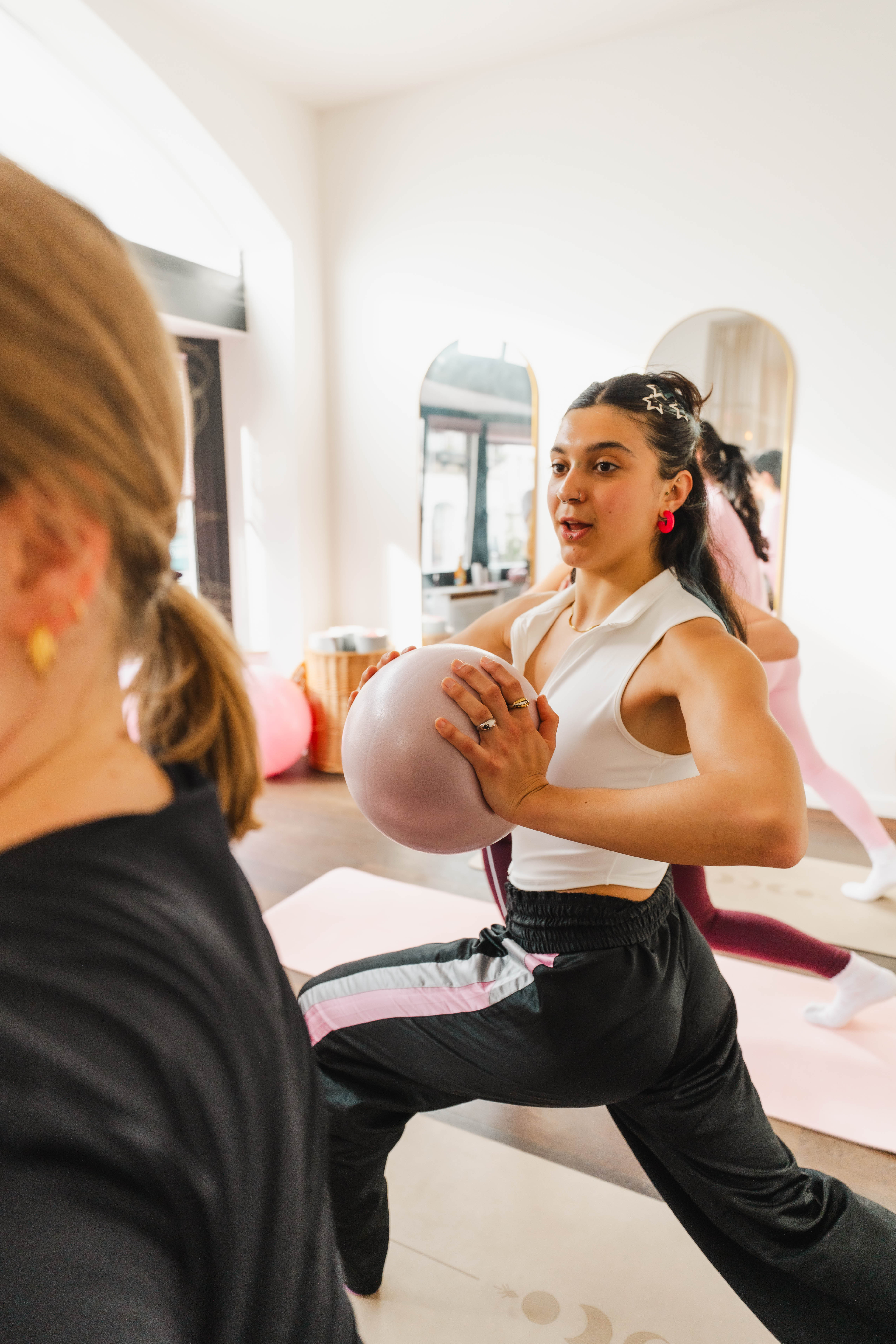
Votre premier cours de Pilates : le guide complet pour débuter sereinement
Pousser pour la première fois la porte d’un studio, c’est une expérience qui mêle une vraie excitation et une bonne dose de trac. Est-ce que je vais détonner ? Est-ce que je vais comprendre ce qui se passe ? Est-ce que le professeur va me mettre en avant ? Et si je n’arrive à faire aucun exercice ? Ces questions traversent l’esprit de presque tout le monde avant un premier cours de Pilates, quel que soit son niveau sportif.
La bonne nouvelle : cette appréhension est universelle, parfaitement normale et tout à fait surmontable. Chaque personne que vous verrez enchaîner avec aisance des exercices avancés a un jour été exactement à votre place – à se demander dans quoi elle s’était lancée et si elle tiendrait les 50 minutes suivantes. Entre celles qui tombent amoureuses du Pilates et celles qui abandonnent avant d’avoir vraiment commencé, la différence tient souvent à une seule chose : savoir à quoi s’attendre.
Dans ce guide complet, nous vous accompagnons à chaque étape de votre premier cours, de la réservation jusqu’à la sortie du studio. Vous saurez quoi porter, quoi apporter, quel type de cours choisir, comment communiquer avec votre instructrice, ce que vous ressentirez pendant les exercices et comment tirer le meilleur de ces premières semaines décisives.
Choisir le bon premier cours
Tapis ou Reformer
L’une des premières décisions concerne le type de cours. Le Pilates au sol (sur tapis) utilise uniquement le poids du corps sur un tapis rembourré, tandis que le Pilates Reformer utilise un appareil spécifique avec ressorts, sangles et chariot coulissant. Les deux sont excellents, mais ils offrent une première expérience différente.
Les cours sur tapis sont généralement plus accessibles aux grandes débutantes. Les exercices sont plus simples à comprendre, le matériel est minimal et vous pouvez vous concentrer entièrement sur l’apprentissage des mouvements fondamentaux, sans la complexité supplémentaire d’une machine. De nombreux studios proposent des cours débutants sur tapis, à un rythme plus lent et centrés sur les principes de base.
Les cours sur Reformer peuvent être très motivants pour une première fois, car la résistance des ressorts aide à comprendre quels muscles engager et l’appareil donne un retour que le tapis n’offre pas. En revanche, la courbe d’apprentissage est plus raide : il faut apprendre à régler les ressorts, à se positionner en sécurité sur le chariot et à utiliser les différents accessoires. C’est pourquoi la plupart des studios recommandent vivement une séance d’initiation privée ou un cours Reformer débutant avant de rejoindre les cours collectifs.
Si vous hésitez vraiment, appelez le studio et expliquez votre situation. Un studio de qualité vous orientera vers le bon point de départ selon votre passé sportif, vos éventuelles blessures ou limitations et vos objectifs.
Cours collectif ou séance privée
Les cours collectifs sont plus abordables, conviviaux et stimulants. Vous faites partie d’une communauté dès le premier jour et vous apprenez aussi en observant les autres. En revanche, vous recevez moins d’attention individuelle, ce qui peut être difficile quand on découvre des mouvements inconnus.
Les séances privées coûtent nettement plus cher, mais offrent un enseignement personnalisé, des exercices adaptés à votre corps et la liberté de poser vos questions sans avoir l’impression de ralentir le groupe. Pour une grande débutante, surtout en cas de blessure, de problème postural ou d’objectif précis, une ou deux séances privées avant les cours collectifs peuvent accélérer nettement l’apprentissage et renforcer la sécurité.
Un bon compromis pour beaucoup de débutantes : une séance privée d’initiation, puis des cours collectifs adaptés aux débutantes. Vous combinez ainsi des bases personnalisées avec l’accessibilité et l’esprit de communauté des cours en groupe.
Les cours spécial débutantes
Si votre studio propose des cours intitulés « débutant », « initiation » ou « fondamentaux », commencez par là. Ces cours ne supposent aucune expérience, avancent à un rythme réfléchi et mettent l’accent sur la qualité d’exécution plutôt que sur la complexité. Évitez les cours « intermédiaire » ou « avancé », ou ceux qui mentionnent des exercices particulièrement exigeants, tant que vous n’avez pas quelques semaines de pratique régulière derrière vous.
Se préparer le jour du cours
Quoi porter
Votre tenue doit être suffisamment près du corps pour que l’instructrice puisse voir votre alignement, tout en restant confortable pour permettre une amplitude de mouvement complète. Les vêtements amples empêchent l’instructrice d’évaluer votre posture et peuvent se coincer dans le matériel.
Pour les femmes, un legging ou un corsaire ajusté avec une brassière ou un débardeur près du corps fonctionne très bien. Évitez les hauts trop larges qui retombent sur le visage pendant les exercices inversés. Pour les hommes, un short ou un legging de sport ajusté avec un t-shirt technique près du corps est idéal ; évitez les shorts amples qui remontent pendant les exercices de jambes.
Le Pilates se pratique traditionnellement pieds nus ou avec des chaussettes antidérapantes – des chaussettes munies de picots en caoutchouc sous la plante. La plupart des studios en vendent à l’accueil si vous n’en avez pas. Les chaussettes classiques sont trop glissantes et peuvent être dangereuses, et les baskets ne sont pas adaptées au Pilates.
Quoi apporter
La plupart des studios fournissent les tapis et les petits accessoires comme les élastiques ou les cercles, vous n’avez donc généralement pas besoin d’apporter de matériel pour votre premier cours. Prenez une gourde, une petite serviette et vos chaussettes antidérapantes si vous en avez.
Évitez le maquillage chargé, les parfums forts et les bijoux trop nombreux. Vous serez allongée sur le dos, sur le ventre et sur le côté pendant le cours : le maquillage a tendance à couler et les bijoux peuvent être inconfortables, voire dangereux. Attachez solidement les cheveux longs.
Quoi manger (et éviter) avant le cours
Le Pilates comporte beaucoup d’exercices allongée sur le dos et de mouvements qui compriment l’abdomen. Un repas copieux dans les deux heures qui précèdent le cours est la garantie d’un vrai inconfort, voire de nausées. L’idéal : une collation légère 60 à 90 minutes avant – quelque chose de facile à digérer, comme un fruit, une petite poignée de noix ou un yaourt léger.
Pour un cours classique de 50 minutes, l’hydratation compte davantage que l’apport énergétique. Buvez suffisamment d’eau tout au long de la journée, puis par petites gorgées dans l’heure qui précède. Emportez de l’eau et buvez pendant les pauses plutôt que d’avaler de grandes quantités d’un coup.
L’arrivée au studio
Arrivez en avance
Arrivez au moins 15 minutes avant votre premier cours. Vous aurez le temps de vous garer, de remplir les éventuels formulaires, de découvrir les lieux, de repérer les toilettes et le vestiaire, et de rencontrer votre instructrice avant le début. Arriver pile à l’heure, c’est commencer votre première expérience de Pilates déjà pressée et stressée – exactement l’inverse de ce que vous recherchez.
Présentez-vous à l’instructrice
C’est vraiment important. Dites-lui que vous débutez, signalez toute blessure ou limitation physique, partagez vos objectifs et posez vos questions. Une instructrice de qualité attend cet échange et appréciera votre transparence. Elle adaptera souvent certains exercices pour vous, surveillera plus attentivement votre posture et prendra de vos nouvelles pendant le cours.
Ne minimisez pas vos blessures ou limitations par gêne. Une instructrice compétente peut s’adapter à presque toutes les situations, à condition d’être informée. Lui dire en plein cours que votre épaule vous gêne depuis des années est bien moins utile que de le mentionner avant de commencer.
Installez-vous
L’instructrice vous indiquera où placer votre tapis ou quel appareil utiliser. N’hésitez pas à demander en cas de doute. Rangez votre gourde et vos affaires de manière à ce que personne ne trébuche ; beaucoup de studios disposent de casiers ou d’étagères prévus à cet effet.
Ce que vous allez réellement ressentir pendant le cours
Les dix premières minutes
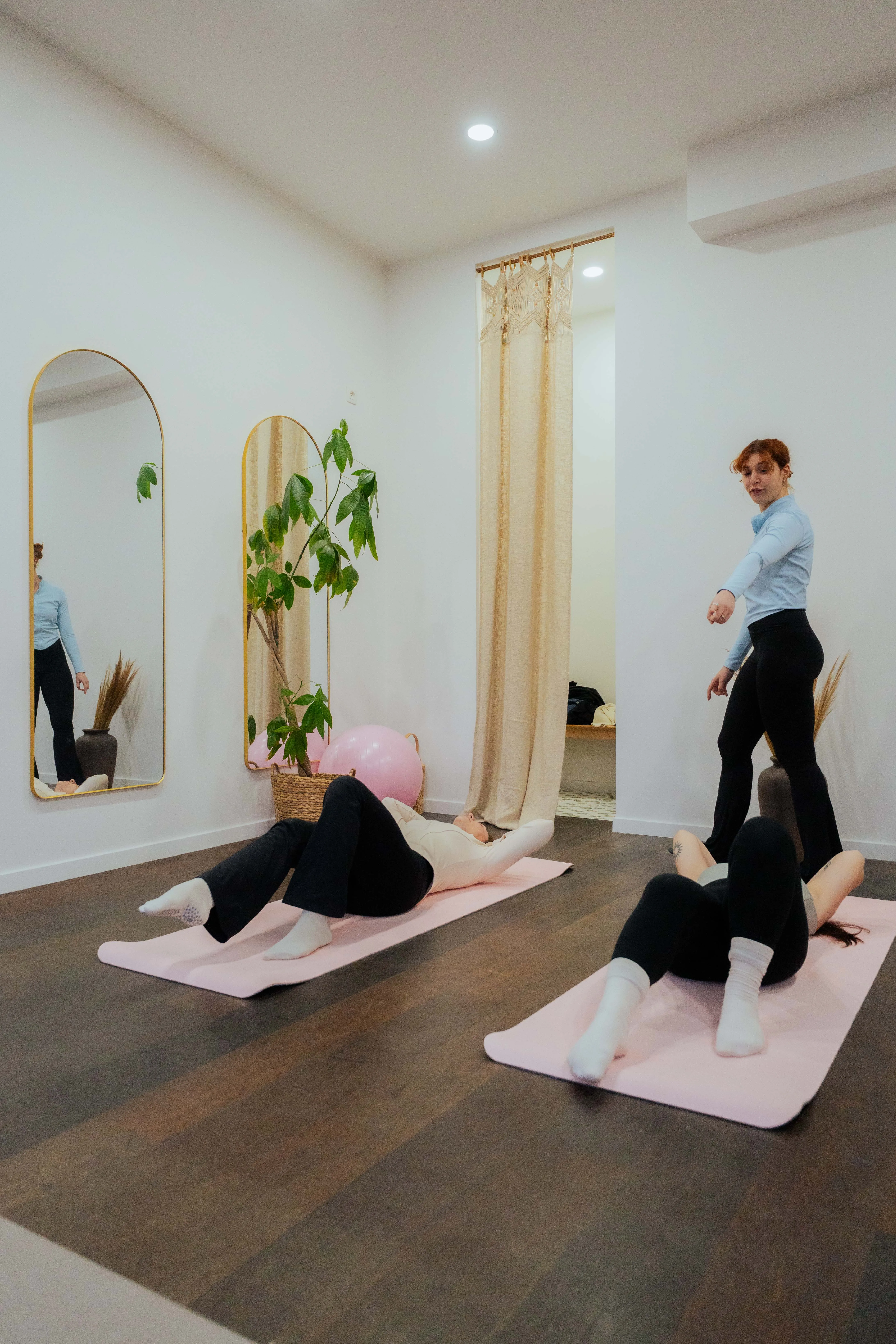
La plupart des cours de Pilates commencent par un travail respiratoire et un échauffement doux qui établissent le lien entre le corps, l’esprit et la respiration. Vous serez probablement allongée sur le dos pour apprendre la respiration thoracique latérale – respirer dans les côtes et le dos plutôt que de gonfler le ventre. Cela peut sembler étrange ou trop simple au début. Faites confiance au processus : ce travail de base nourrit tout ce qui suit.
Vous découvrirez aussi des notions fondamentales comme la colonne neutre, l’engagement du centre et le bon placement des épaules. Les consignes peuvent ressembler à une langue étrangère au début : « rentrez le nombril vers la colonne », « grandissez-vous par le sommet du crâne », « relâchez les côtes ». Ne vous inquiétez pas si vous ne comprenez pas tout immédiatement : votre corps apprendra progressivement ce que ces consignes signifient, par la répétition et la sensation.
Le cœur de la séance
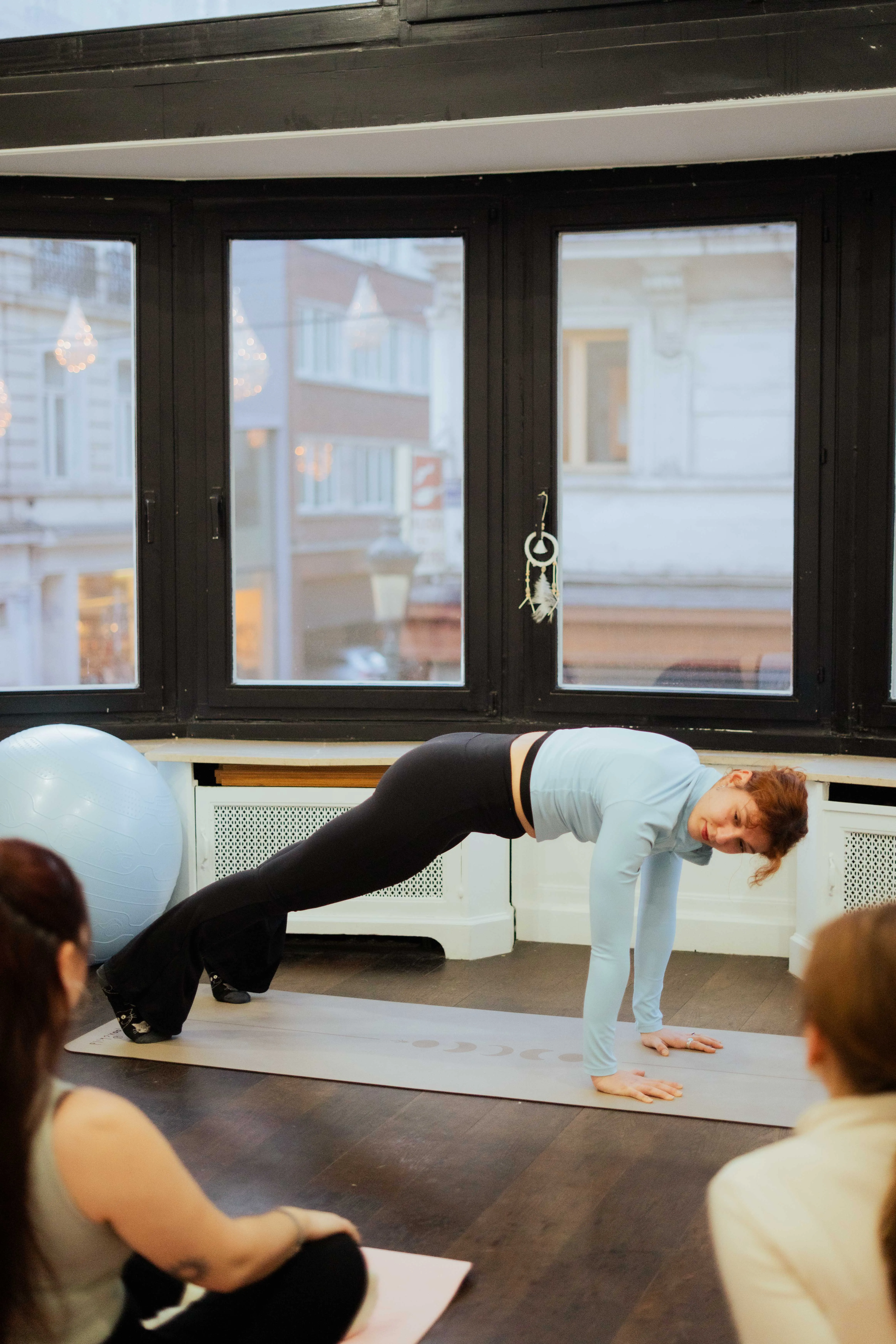
C’est là que le travail se fait. Vous enchaînerez une série d’exercices qui ciblent différentes zones du corps, avec une forte priorité donnée au centre. Attendez-vous aux grands classiques comme le Hundred (des battements de bras rythmés en maintenant les jambes en position contrôlée), le roll-up (dérouler lentement la colonne de la position allongée à assise), le single leg stretch (alternance de mouvements de jambes avec un buste stable) et différentes variantes de planche.
Certains exercices vous mettront en difficulté. C’est tout à fait normal et attendu. Même des personnes sportives découvrent souvent, en débutant le Pilates, que leur corps ne bouge pas comme elles l’imaginaient. Le roll-up, en particulier, rend humble presque tout le monde au premier cours. Résistez à l’envie de vous comparer aux autres ou à l’idée que vous vous faisiez de vos capacités : vous apprenez de nouveaux schémas de mouvement, et apprendre prend du temps.
Les tremblements
À un moment du cours, vos muscles vont se mettre à trembler. Ce n’est pas le signe que quelque chose ne va pas – au contraire, c’est le signe que vous faites bien. Le Pilates cible les muscles stabilisateurs profonds que la plupart des gens n’activent jamais consciemment, et ces muscles fatiguent vite lorsqu’ils sont sollicités de façon contrôlée et prolongée. Les tremblements, c’est votre système nerveux qui recrute activement des unités motrices pour tenir une position qui sollicite vos muscles d’une façon inhabituelle. Accueillez cette sensation : elle signifie que vous travaillez correctement.
Le retour au calme
La plupart des cours se terminent par des étirements plus doux et des exercices de respiration qui aident le corps à intégrer ce qu’il vient d’apprendre. C’est souvent là que l’on vit son premier vrai moment Pilates : la sensation d’être plus grande, mieux alignée et plus connectée à son corps. Ne partez pas avant la fin pour gagner du temps : c’est dans cette phase d’intégration qu’une grande partie de la magie opère.
Communiquer avec votre instructrice
Recevoir des corrections
Vous serez corrigée. Souvent. Ce n’est pas une critique : c’est tout l’intérêt de suivre un cours avec une instructrice qualifiée plutôt qu’une vidéo. Les ajustements manuels et les consignes verbales vous apprennent la bonne posture et vous permettent de tirer le meilleur de chaque exercice.
Certaines pratiquantes sont d’abord mal à l’aise avec les ajustements physiques. Si le fait d’être touchée vous pose question, dites-le à votre instructrice avant le cours. La plupart des studios peuvent se limiter aux consignes verbales. Votre confort compte, et une instructrice de qualité respectera toujours les limites que vous fixez.
Poser des questions
Si vous ne comprenez pas une consigne ou si vous sentez un exercice à un endroit inattendu, demandez. Une bonne instructrice préfère faire une courte pause pour préciser plutôt que de vous laisser faire un exercice incorrectement pendant tout le cours. Les questions ne sont pas des interruptions : elles montrent que vous êtes impliquée et que vous voulez apprendre correctement.
La fin du cours est aussi un excellent moment pour poser vos questions. Restez quelques instants et demandez tout ce qui vous est venu pendant la séance. Les instructrices apprécient généralement les élèves qui montrent un réel intérêt pour approfondir leur pratique.
Respecter vos limites
Le Pilates doit être exigeant, mais il ne doit jamais provoquer de douleur vive, lancinante ou irradiante. La fatigue musculaire, les tremblements et même un inconfort passager lié à un travail inhabituel sont attendus. En revanche, une douleur aiguë dans une articulation, une sensation de décharge électrique dans un membre ou toute douleur qui s’aggrave pendant un exercice sont des signaux pour vous arrêter et prévenir immédiatement l’instructrice.
Face à l’inconfort, la bonne réponse est de communiquer, pas de serrer les dents. Il n’y a aucun mérite à forcer malgré une douleur inappropriée en Pilates : il existe des adaptations et des alternatives pour presque chaque exercice.
Après votre premier cours
Ce que vous ressentirez tout de suite
Beaucoup de débutantes disent se sentir plus grandes, mieux alignées et étonnamment pleines d’énergie après leur premier cours. La combinaison d’une respiration consciente, de mouvements maîtrisés et d’une meilleure conscience posturale procure un bien-être immédiat, très différent de la fatigue satisfaite d’un entraînement à haute intensité.
Vous pourrez aussi vous sentir un peu désorientée. Le Pilates sollicite des muscles que vous n’avez pas utilisés consciemment depuis longtemps, et votre système nerveux peut avoir besoin de quelques heures pour intégrer ces nouvelles sensations. C’est tout à fait normal : buvez de l’eau, prenez un repas équilibré et laissez votre corps digérer l’expérience.
Les courbatures du lendemain
Vous aurez probablement des courbatures le lendemain de votre premier cours, souvent à des endroits inattendus : abdominaux profonds, intérieur des cuisses, haut du dos et petits muscles stabilisateurs autour des hanches. Ces courbatures apparaissent avec un temps de retard, culminent 24 à 48 heures après l’effort et disparaissent en quelques jours.
Des courbatures légères à modérées sont normales et indiquent que vous avez travaillé des muscles qui en avaient besoin. Des courbatures intenses qui durent plus de trois jours ou limitent nettement vos activités quotidiennes suggèrent que vous en avez trop fait. Signalez-le à votre instructrice avant le cours suivant pour qu’elle vous aide à trouver la bonne intensité.
Faut-il y retourner le lendemain ?
Oui, idéalement. Beaucoup pensent qu’il faut attendre la disparition complète des courbatures, mais un mouvement doux accélère la récupération et ancre ce que votre corps a appris. Si vous êtes très courbaturée, choisissez un cours débutant plus doux plutôt que de renoncer complètement. Le mouvement est un remède pour les muscles courbaturés, en particulier le mouvement contrôlé et conscient que propose le Pilates.
Si vous êtes vraiment épuisée ou si vous ressentez une vraie douleur plutôt que des courbatures, un jour de repos est justifié. Mais évitez le piège d’un cours difficile qui se transforme en une semaine de pause et casse votre élan.
Installer la régularité dès le premier cours
Le premier mois est le plus difficile
Soyez honnête avec vous-même dès le départ : le premier mois de Pilates concentre la courbe d’apprentissage la plus raide, les sensations les plus inhabituelles et le plus grand risque de découragement. Votre corps apprend des schémas de mouvement entièrement nouveaux, et cet apprentissage est réellement exigeant.
Engagez-vous à suivre au moins huit cours avant de décider si le Pilates est fait pour vous, soit environ un mois à raison de deux cours par semaine. À la fin de cette période, vous aurez dépassé la confusion du début, votre corps anticipera les exercices courants et les consignes commenceront à vous parler intuitivement au lieu de sonner comme une langue étrangère.
Réservez vos cours à l’avance
L’un des meilleurs moyens d’être régulière est d’avoir déjà ses cours réservés plutôt que de décider au jour le jour. Bloquez vos créneaux de Pilates dans votre agenda comme n’importe quel rendez-vous important. Prenez une carte de cours ou un abonnement qui vous incite financièrement à venir. Et choisissez un horaire adapté à votre rythme : le soir si vous détestez les matins, tôt le matin si votre motivation s’effrite au fil de la journée.
Suivez vos progrès
Notez simplement après chaque cours ce que vous avez appris, ce qui vous a semblé difficile et vos petites victoires. Ce journal deviendra précieux lorsque vous traverserez inévitablement un palier ou une séance décourageante : relire vos notes de la première semaine quand vous doutez en sixième semaine permet de mesurer tout le chemin parcouru.
Trouvez votre communauté
La dimension communautaire du Pilates a une vraie valeur. Engagez la conversation avec les autres pratiquantes avant et après le cours. Repérez les habituées et demandez-leur leurs conseils pour débuter. Beaucoup de studios organisent aussi des événements, des ateliers et des programmes spéciaux qui permettent de créer des liens au-delà du cours lui-même.
En résumé
Votre premier cours de Pilates est la porte d’entrée d’une pratique qui peut transformer durablement votre relation à votre corps. L’appréhension que vous ressentez avant est universelle, et la maladresse que vous vivez pendant le cours fait partie de l’apprentissage pour absolument tout le monde, quel que soit son passé sportif.
Ce qui distingue celles qui installent une pratique durable de celles qui abandonnent tôt, c’est rarement le talent ou les facilités naturelles : c’est la préparation, la patience et la régularité. En choisissant un cours adapté aux débutantes, en portant une tenue appropriée, en communiquant ouvertement avec votre instructrice et en abordant l’expérience avec curiosité plutôt qu’avec une pression de performance, vous vous offrez la meilleure introduction possible à cette méthode remarquable. Dites-vous que la confusion fait partie de l’apprentissage, que les courbatures font partie de la progression, et que les pratiquantes qui semblent si fluides étaient un jour exactement à votre place.
Le plus important pour votre premier cours de Pilates, c’est tout simplement de venir. Venez à l’heure, venez l’esprit ouvert, venez prête à apprendre, et revenez même si c’était plus difficile que prévu.
Votre corps vous surprendra. Votre esprit s’apaisera d’une façon que vous ne soupçonniez pas. Et très vite, c’est vous que la débutante du mois prochain regardera enchaîner les exercices avec assurance – en se demandant comment on peut être intimidée par quelque chose qui est devenu une part si importante de votre vie. Le voyage de mille cours commence par celui-ci. Bienvenue dans le Pilates.